Am I Masking or Just Coping? 7 Signs to Help You Tell the Difference
You've probably asked yourself this question more than once. Maybe after a long day of work when you finally close your front door and feel your whole body exhale. Maybe after scrolling through neurodivergent content online and thinking, wait, that sounds like me.
Here's the thing: both masking and coping are survival strategies. Both help you get through the day. But one of them costs you pieces of yourself over time, and the other actually supports you.
If you've ever wondered whether you're adapting in healthy ways or slowly disappearing behind a version of yourself that isn't quite real, you're not alone. And you're not broken for asking.
Let's break this down together.
What's the Difference, Really?
Before we get into the signs, let's get clear on what we're actually talking about.
Coping is when you acknowledge what's hard and find genuine ways to work within your reality. It's building systems that support you. It's knowing you need noise-canceling headphones in crowded places, and actually wearing them. Coping says, this is who I am, and here's how I'm going to take care of myself.
Masking is different. Masking is when you suppress, hide, or perform your way through situations to fit in or avoid judgment. It's forcing eye contact when it feels painful. It's laughing at jokes you don't find funny because you learned that's what people expect. Masking says, this is who I need to pretend to be so no one notices I'm struggling.
One builds you up. The other hollows you out.
The tricky part? They can look identical from the outside. That's why these signs matter.
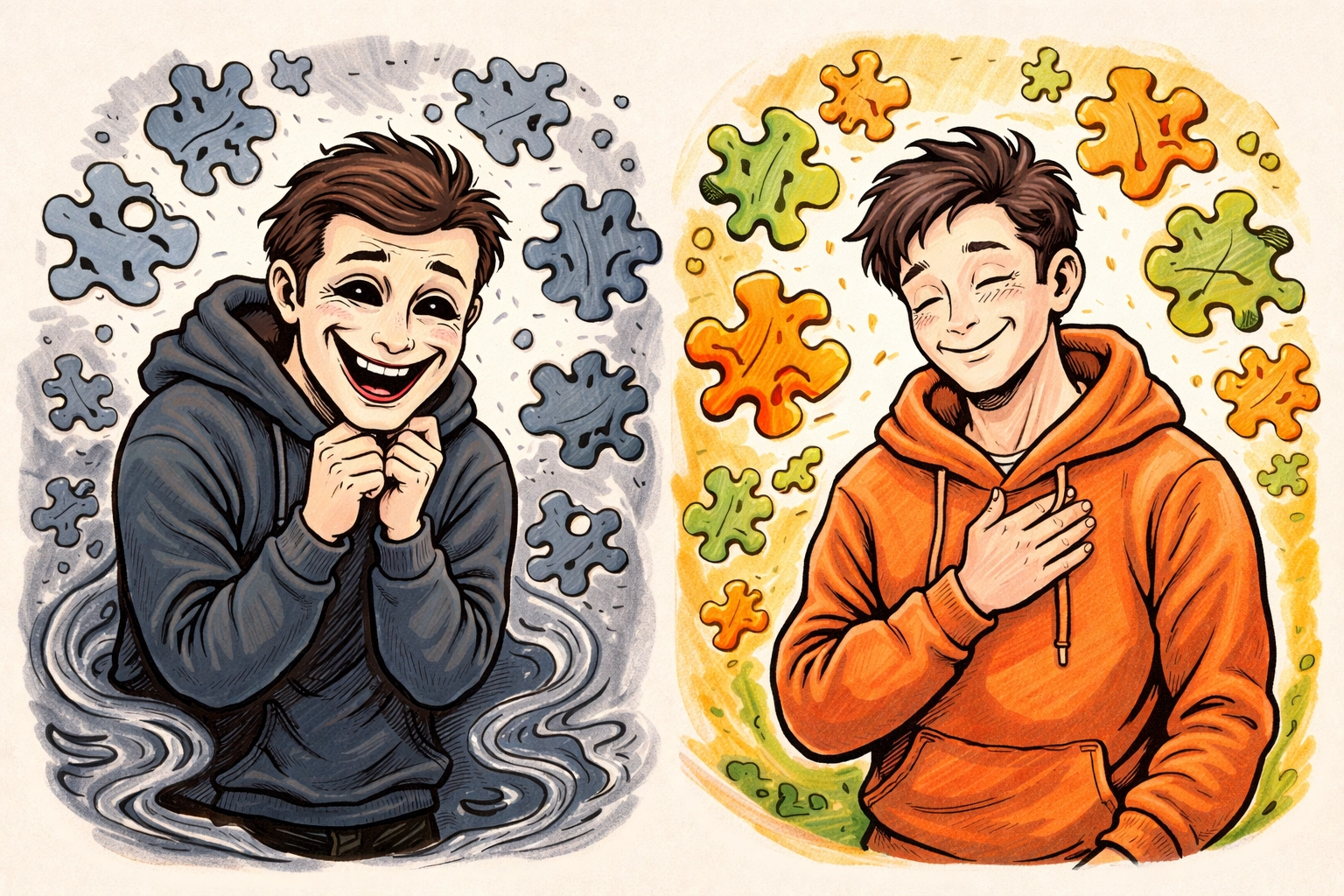
7 Signs You Might Be Masking (Not Just Coping)
1. You Feel Exhausted After "Normal" Social Interactions
We all get a little tired after a long day. But this is different.
If you come home from a casual dinner with friends, people you actually like, and feel like you just ran a marathon, that's worth noticing. Masking requires constant mental effort. You're monitoring your tone, your body language, your responses. You're performing "normal" in real time.
Healthy coping might leave you needing a quiet evening. Masking leaves you needing three days to recover from a two-hour brunch.
2. There's a Big Gap Between "Public You" and "Home You"
Think about how you act when you're completely alone versus how you act in meetings, at family gatherings, or even with close friends.
Some difference is natural, we all adjust slightly to different contexts. But if the gap feels enormous, if "work you" and "real you" are practically different people, that's a sign you're not just adapting. You're hiding.
Masking creates a version of yourself that feels safer to show the world. But it also means the people around you might not actually know you at all.
3. You Struggle to Know What You Actually Want or Feel
This one sneaks up on you.
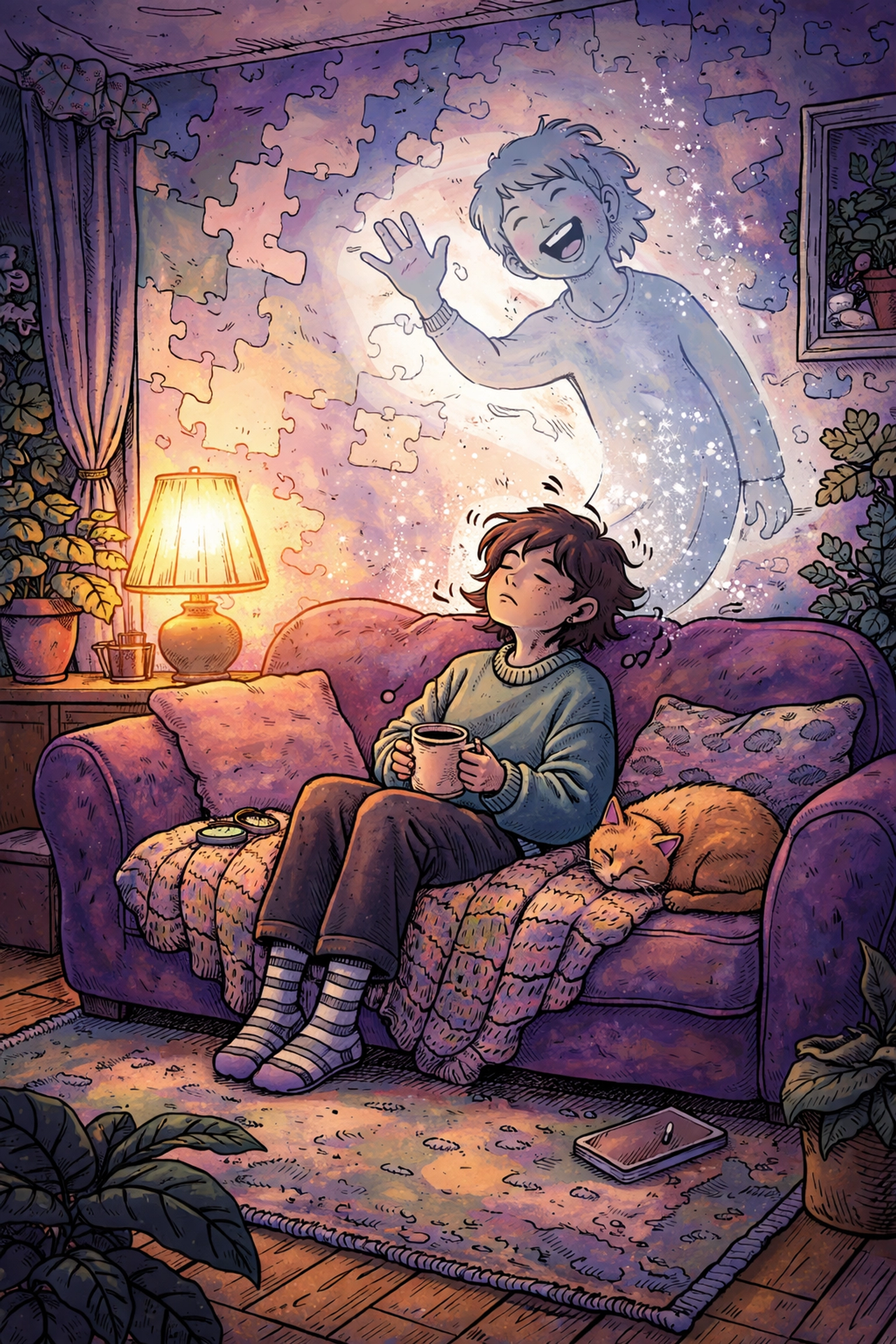
When you spend years adjusting your reactions to match what's expected, you can lose track of your own internal signals. Someone asks what you want for dinner, and your mind goes blank, not because you don't have preferences, but because you've trained yourself to suppress them.
Masking disconnects you from your own needs. Over time, you might not even recognize what you're feeling until it explodes out of nowhere.
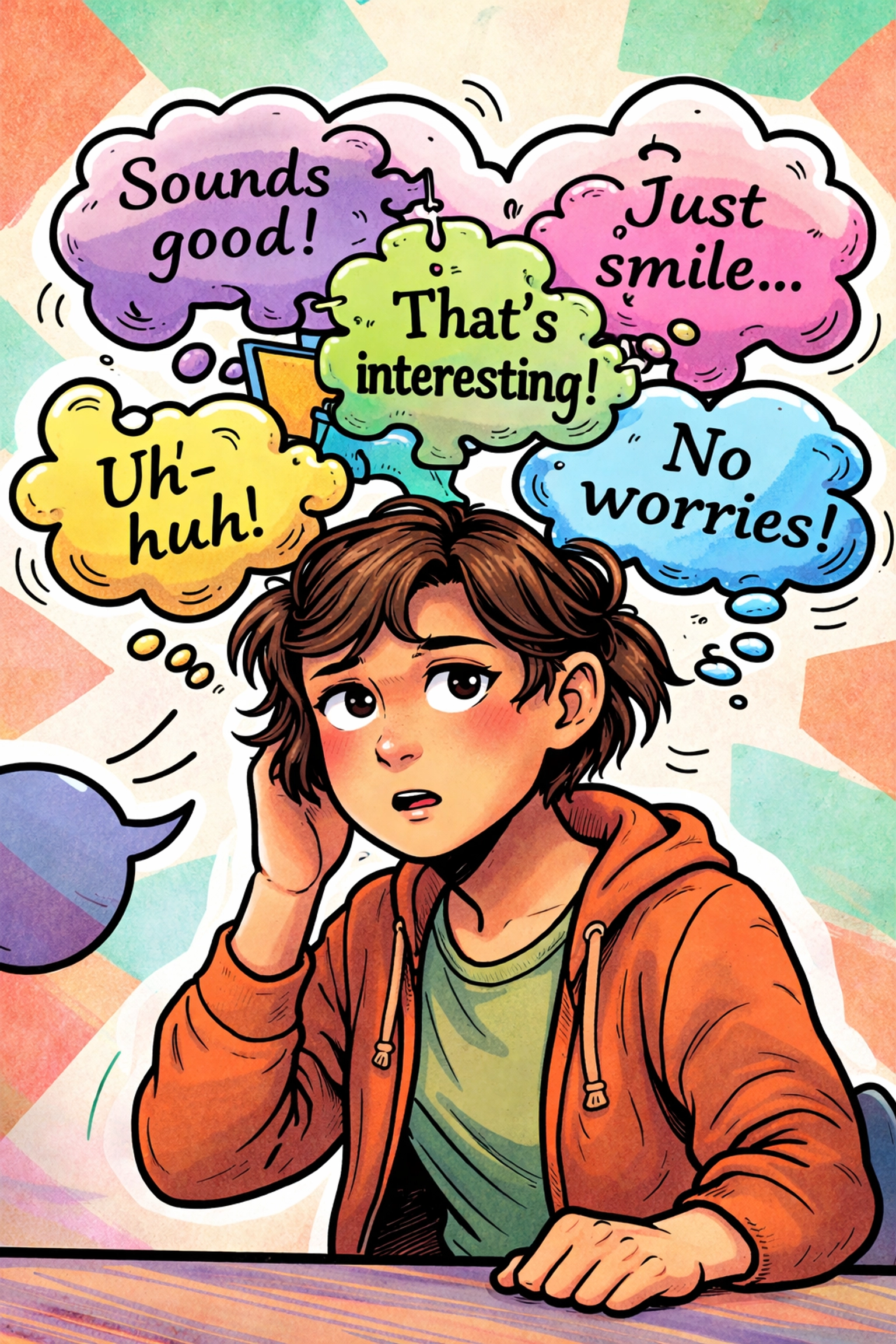
4. You've Developed a "Script" for Social Situations
Do you mentally rehearse conversations before they happen? Do you have go-to phrases, questions, or responses that you cycle through so you don't have to think on your feet?
Scripts aren't inherently bad, they can be genuine coping tools. But here's the difference: a coping script helps you communicate more effectively. A masking script helps you hide how hard communication actually is for you.
If your scripts exist because you're terrified people will see the "real" you struggle, that's masking.
5. You Feel Like a Fraud, Even When You're Succeeding
Imposter syndrome is common. But for people who mask, it runs deeper.
It's not just I got lucky this time. It's if anyone knew how hard I worked to seem this normal, they'd realize I don't belong here.
Because when your success depends on a performance, it never feels like it actually counts. You're not being recognized for who you are, you're being recognized for who you've learned to pretend to be.
6. You Experience Physical Symptoms With No Clear Cause
Chronic headaches. Jaw pain from clenching. Stomach issues. Random aches that doctors can't quite explain.
The body keeps score. When you spend your days suppressing your natural responses, holding back stims, forcing yourself to sit still, controlling your tone, managing your expressions, that tension has to go somewhere.
Masking isn't just emotionally exhausting. It lives in your body.
7. The Thought of "Being Yourself" Feels Terrifying
Here's maybe the most telling sign of all.
If the idea of dropping the mask, of letting people see you stim, or hear your real voice, or know that you need accommodations, fills you with dread, that's not just social anxiety. That's a sign that masking has become your default mode of survival.
Healthy coping doesn't require you to hide. It helps you show up as yourself in ways that feel sustainable.
Masking asks you to disappear so others feel comfortable.
Why This Matters
You might be thinking: Okay, but masking has helped me get through life. It's worked.
And that's fair. Masking often starts as protection. Maybe you learned young that being yourself led to rejection, bullying, or confusion from the adults around you. Masking kept you safe.
But here's what we've seen again and again, in families, in late-diagnosed adults, in people who've spent decades wondering why everything feels so hard:
Masking has an expiration date.
At some point, the exhaustion catches up. The burnout hits. The disconnect from yourself becomes unbearable. You can only hold a performance for so long before something gives.
And when that happens, it's not a sign that you've failed. It's a sign that you were never supposed to live this way.
So What Now?
If you recognized yourself in these signs, take a breath. This isn't about judgment: it's about awareness.
Unmasking doesn't happen overnight. It's not flipping a switch. It's a slow, often messy process of relearning who you are underneath all the adaptations you've made.
It might mean:
Letting yourself stim without apologizing
Saying "I need a minute" instead of pushing through
Telling someone what you actually need: even if your voice shakes
Giving yourself permission to rest without earning it first
At INDY Earth Foundation, we believe that healing happens when people are seen: not the performance, not the polished version, but the real, full human underneath.
You don't have to keep disappearing to make others comfortable.
You're allowed to take up space as yourself.
And if no one's told you that lately( consider this your reminder.)
Comments